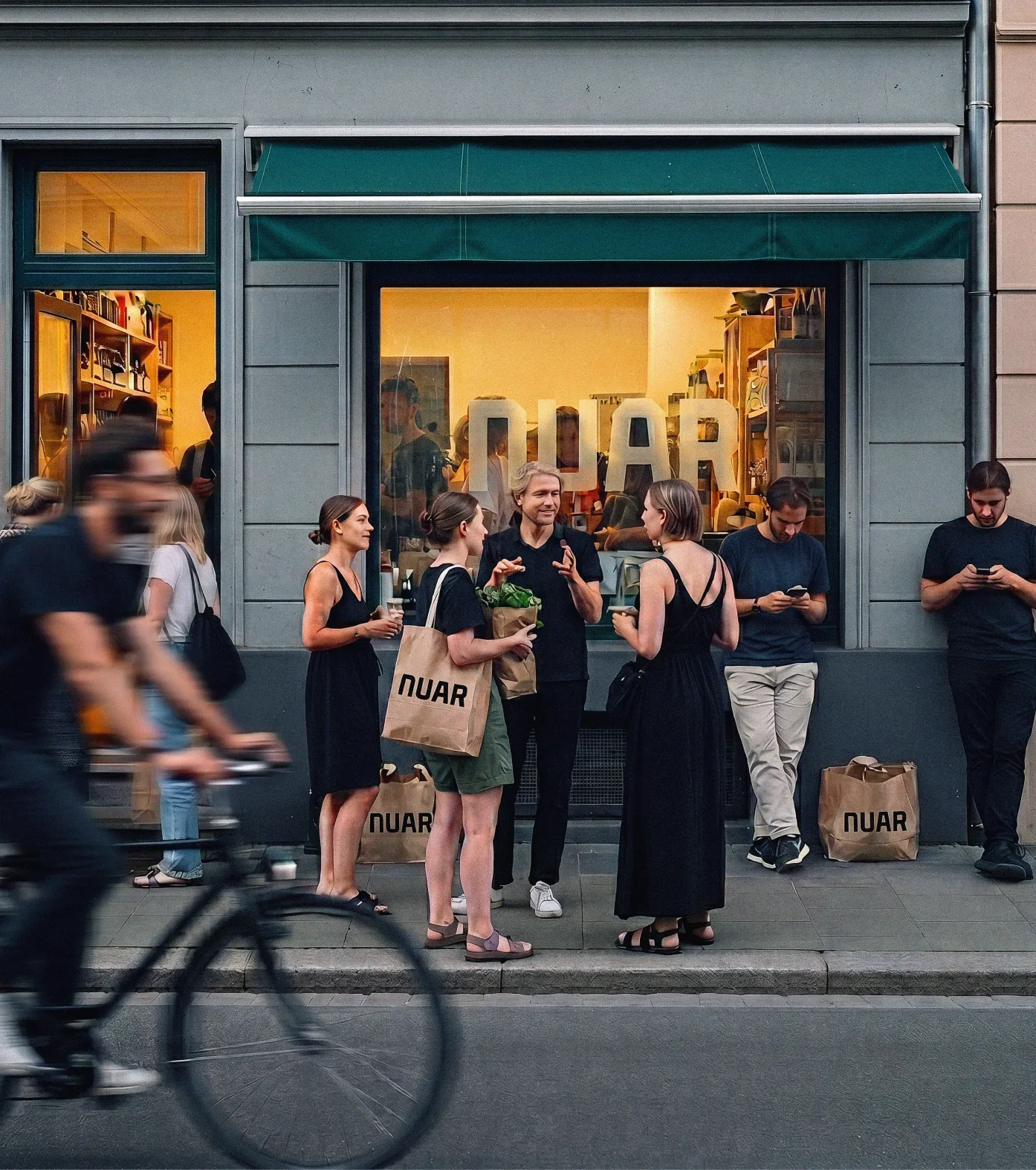
Designing, launching, and rebuilding a social commerce app for local food
Co-founder & solo designer · 2023–present
A social commerce app that turns local food into a weekly habit — not a transaction. Designed end-to-end and shipped a beta in Lithuania. Learned what didn't work, then redesigned the full product from scratch.
The problem
Supermarkets won food. They're convenient, cheap, and everywhere. Local producers can't compete on price, shelf space, or logistics — so they stay invisible to most buyers. The people who do care about local food find it through farmers' markets, word of mouth, or Instagram — none of which scale.
Quick commerce made it worse. It optimised for speed and convenience, reinforcing the idea that food is a commodity to receive, not a community to belong to. The social layer — the thing that actually makes people care about what they eat and come back every week — was never built into any product.
The product
Food went from local to quick commerce — fast, transactional, expensive to operate. Nuar makes it social commerce. Instead of paying to acquire buyers every week, the product is designed so people come back on their own — through a feed they want to browse, producers they want to follow, and a weekly rhythm that feels like a ritual, not a transaction.
The economics are different too. No warehouses — pickup hubs. No unlimited catalogue — curated weekly drops from local producers. No last-mile delivery cost — buyers choose where to pick up. Every design decision serves two goals: make it feel like a community, and make the business actually work.
Three interaction paradigms that don't exist in food commerce today:
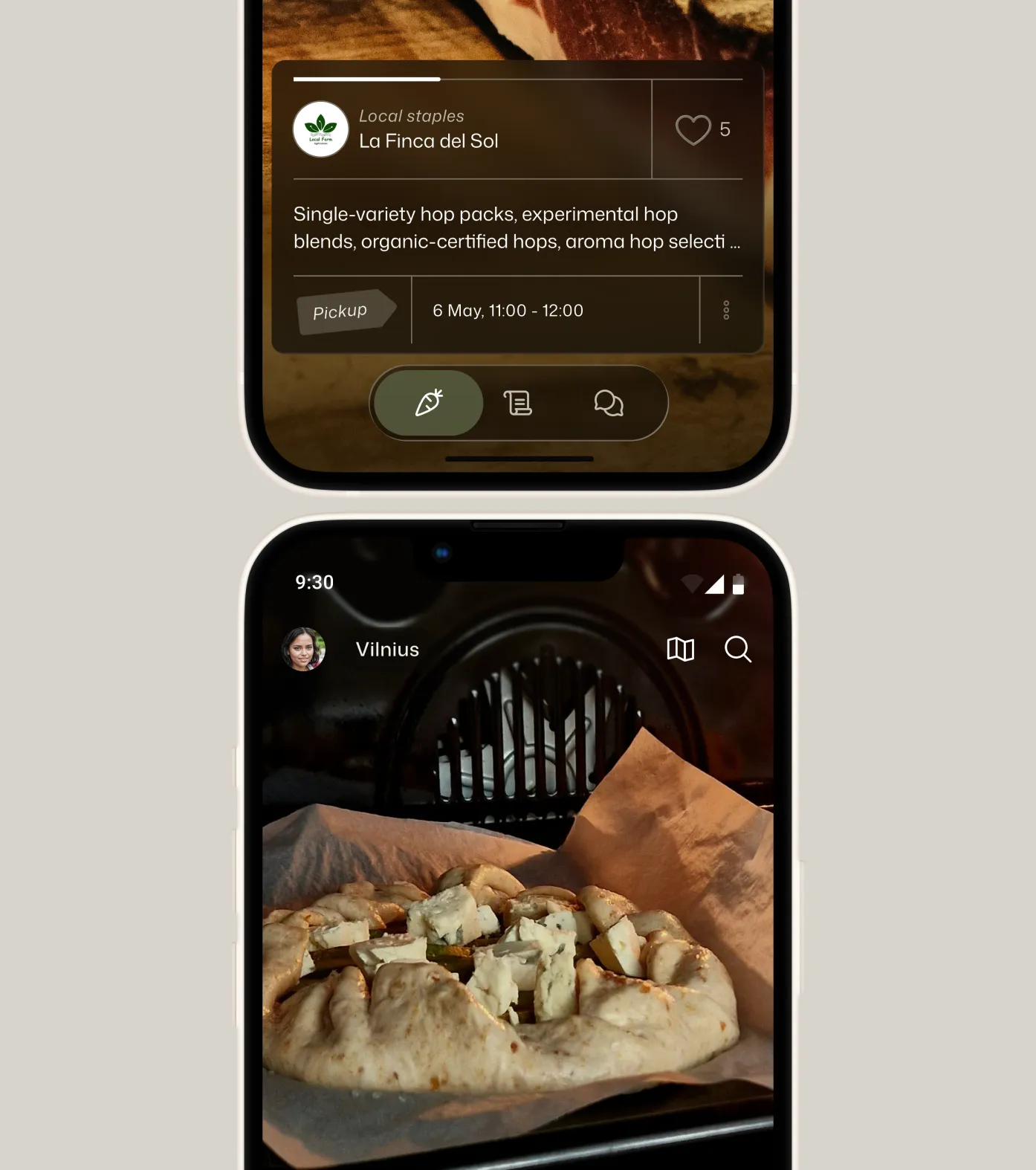
AI-powered discovery feed — a personalised feed using RAG and embeddings that learns from proximity, taste preferences, and local food trends. Not a search bar. Not a static catalogue. An intelligent surface that improves with use — designed to help new users discover relevant producers and achieve their first purchase in the first session.
Pickup hubs + weekly drops — a logistics model designed into the product, not bolted on. Buyers pick up from local collection points on a weekly cycle. The interaction design challenge: making a novel model feel intuitive to users who expect delivery.
Social mechanics as retention engine — discovery based on proximity, taste, and social circles. Recommendations from friends. Follow patterns. Communities organised around goals or fandom. These aren't features — they're the retention strategy. The social layer replaces paid acquisition as the primary driver of repeat purchases.
What I designed
Everything. End-to-end product design as the sole designer and co-founder:
Product design — Full end-to-end execution across a multi-sided product: discovery feed, purchase flows, order management, multiple types of chats, notifications, community and follow system, pickup hub coordination — designed for both buyers and suppliers as parallel but interconnected experiences. High-fidelity prototypes and polished UI craftsmanship in Figma for iOS. Designed interaction patterns for an AI-driven feed where no established conventions exist.
Brand identity — logo, typography system, colour system, visual language, tone of voice. Created from scratch — a complete design system built to scale.
Marketing collateral — waitlist campaigns across 5 European markets (Milan, Madrid, Trondheim, Cologne, and one more). Meta Ads creative, copywriting, and landing pages prototyped and built in Astro.
Design-to-production pipeline — worked directly with my technical co-founder to ship features from design specs through component handoff, QA, and iteration in production.
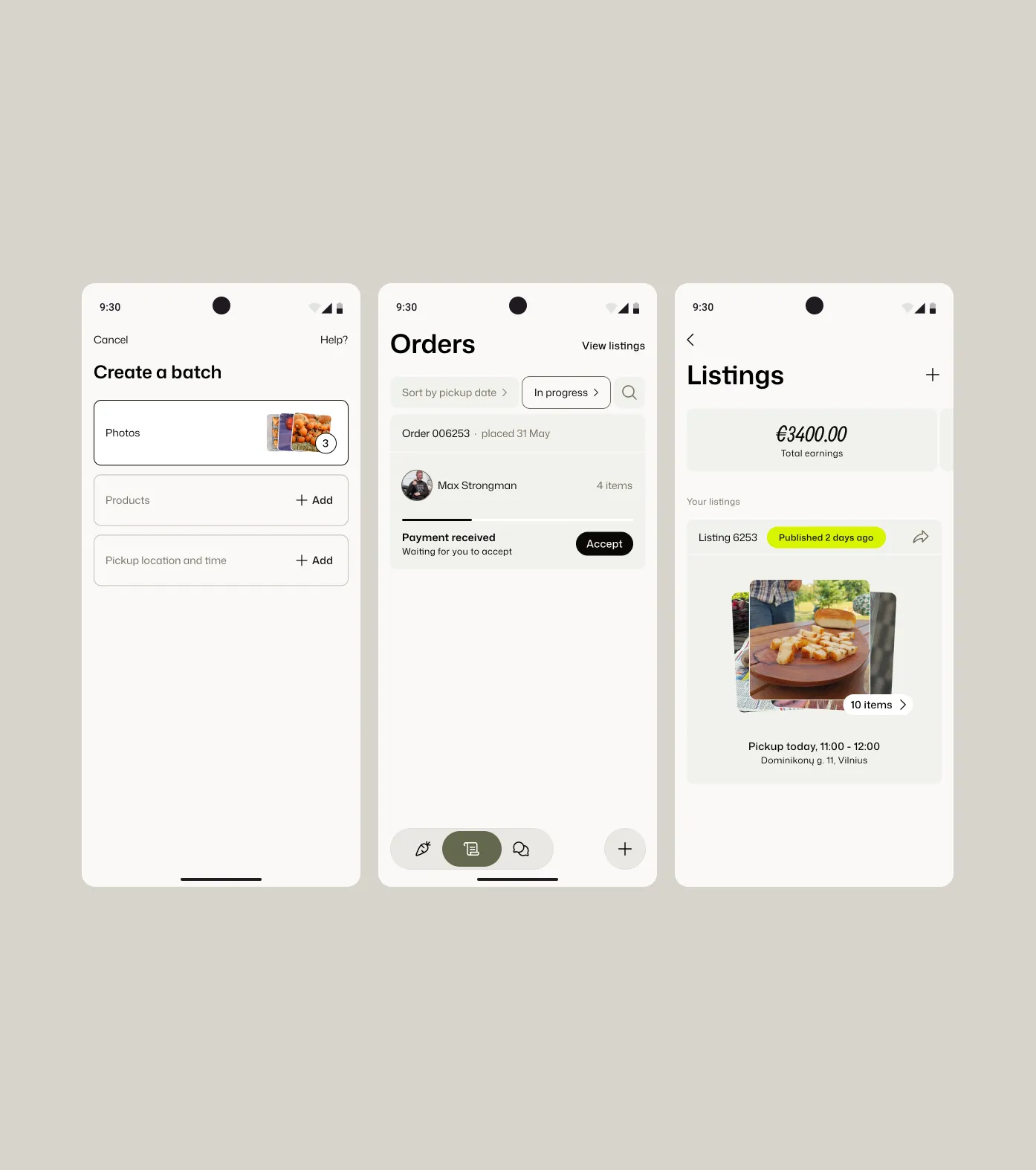
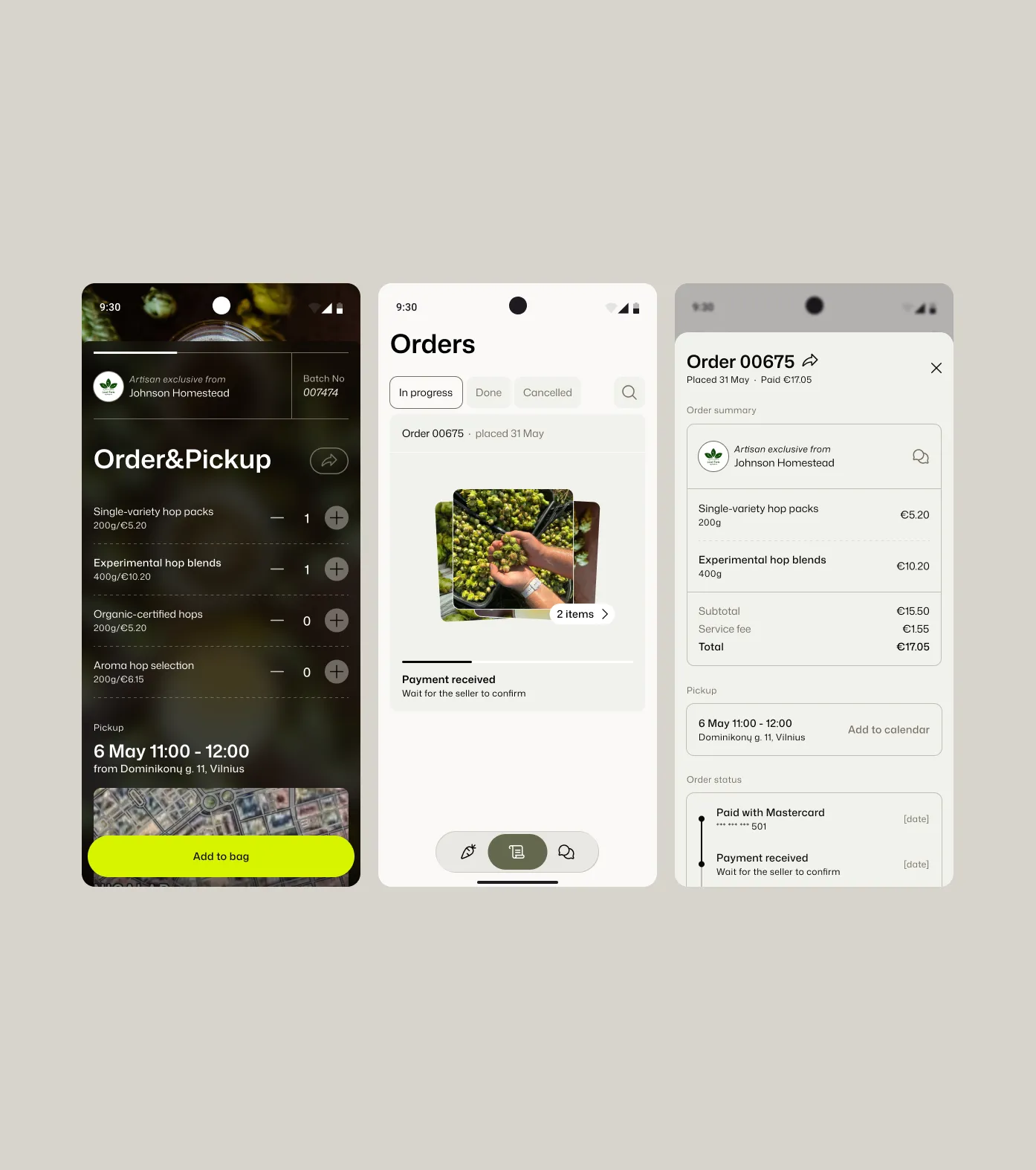
Image 1: Supplier side
Image 2: Buyer side
How I worked
This wasn't a design exercise — it was a live consumer product with real users and real money. I operated with a builder mindset in a deeply ambiguous environment: no PM, no research team, no established playbook.
- Owned every design decision end-to-end — from first wireframe to production QA
- Influenced product and business direction as co-founder, not just the design layer
- Drove initiatives proactively — identified problems, proposed solutions, shipped them
- Ran rapid design-feedback loops with real users weekly throughout beta, using direct user testing and behavioural data to inform iteration on core flows
- Designed and launched marketing campaigns single-handedly across 5 markets — bridging product design, brand, and growth
What we learned in beta
350 users. 80+ suppliers. The demand was real — buyers want local food. But they treat it as an occasional purchase, not a habit. That forces producers to go premium, which makes the purchase even more occasional. A self-reinforcing loop. To break it, local food needs supermarket-comparable pricing and a reason to come back that supermarkets can't offer. That's what the redesign solves.
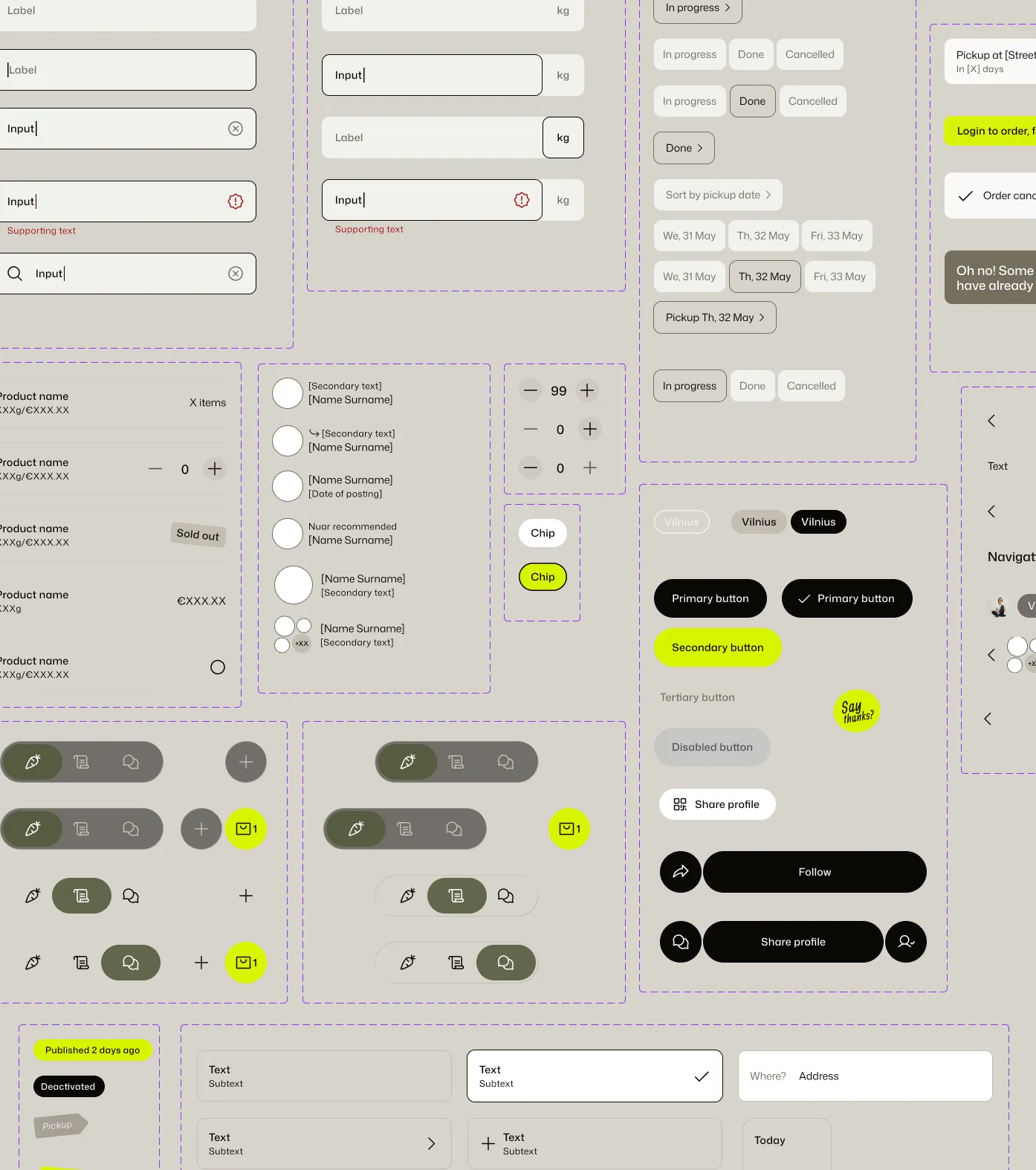
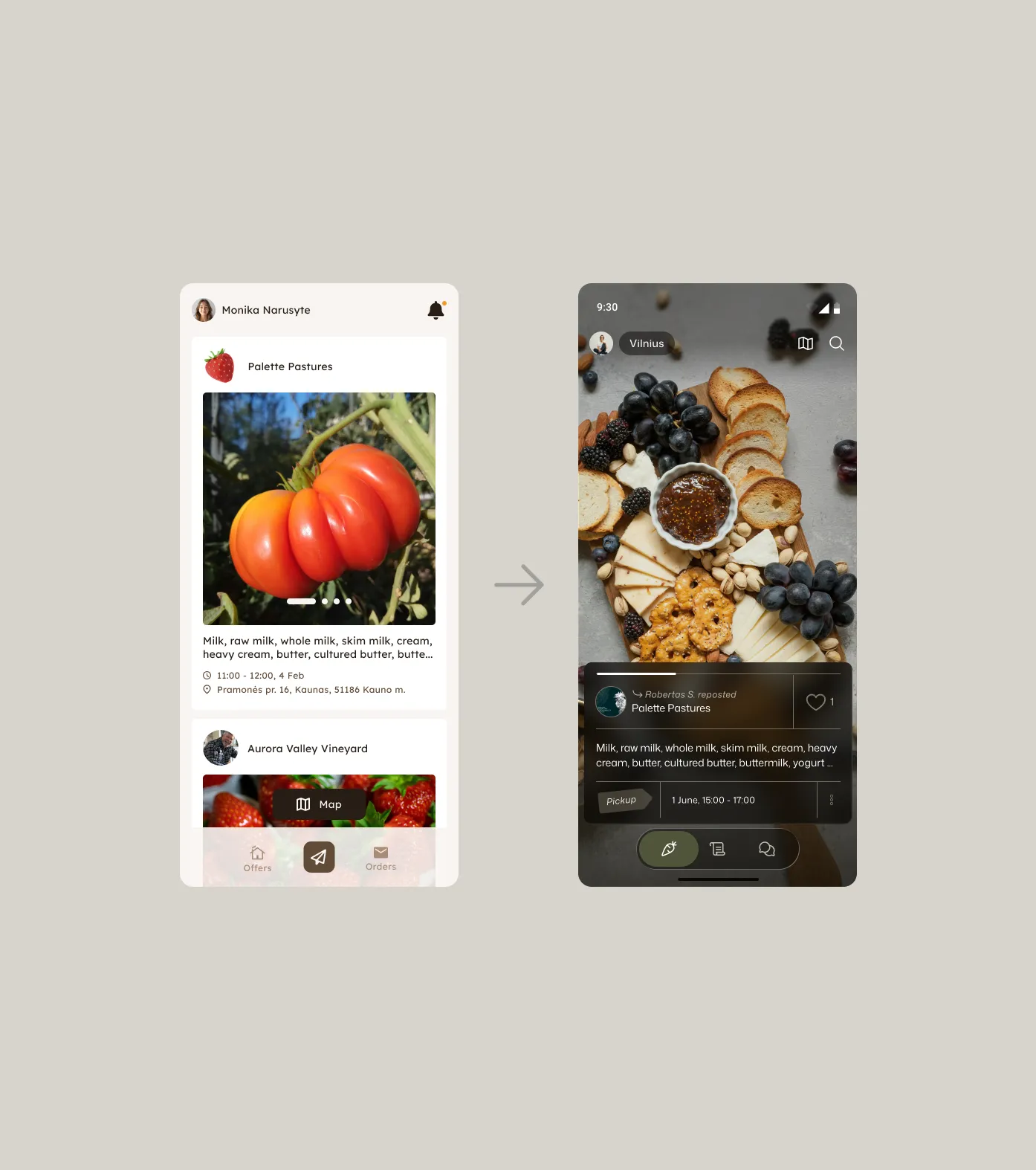
Image 1: Brand system
Image 2: Before / after